Baressi’s Bites
The cookbooks of Tony Baressi

Every Italian dish has one rule. And one shortcut nobody forgives.

100 recipes from Naples, Palermo and Tuscany, and the Italian-American kitchens of Brooklyn and Chicago. Every one tells you the thing you must do, the thing you must never do, and what to pour with it.
  • Instant PDF download
  • Made for American kitchens
  • A wine pairing for every dish
  • 7-day money-back guarantee
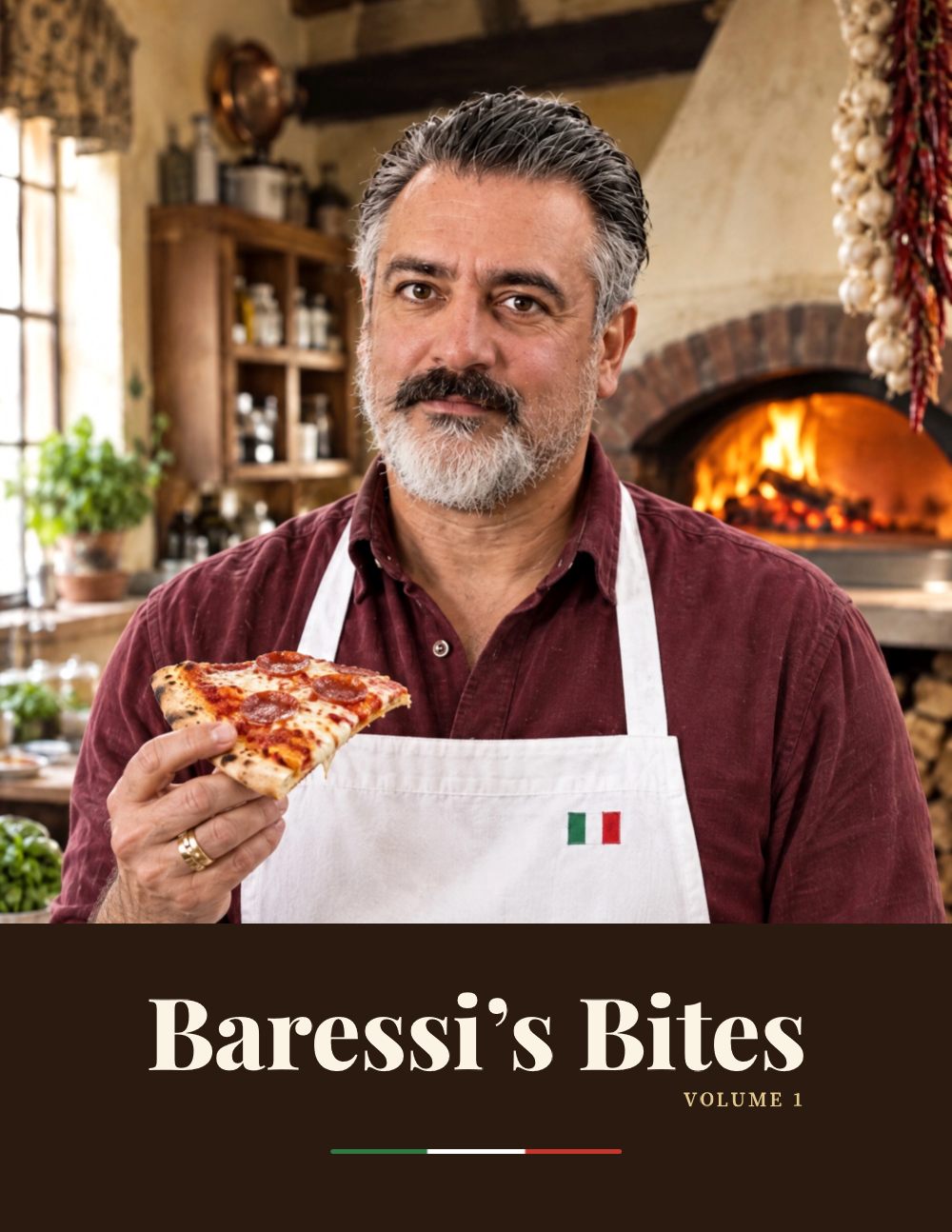
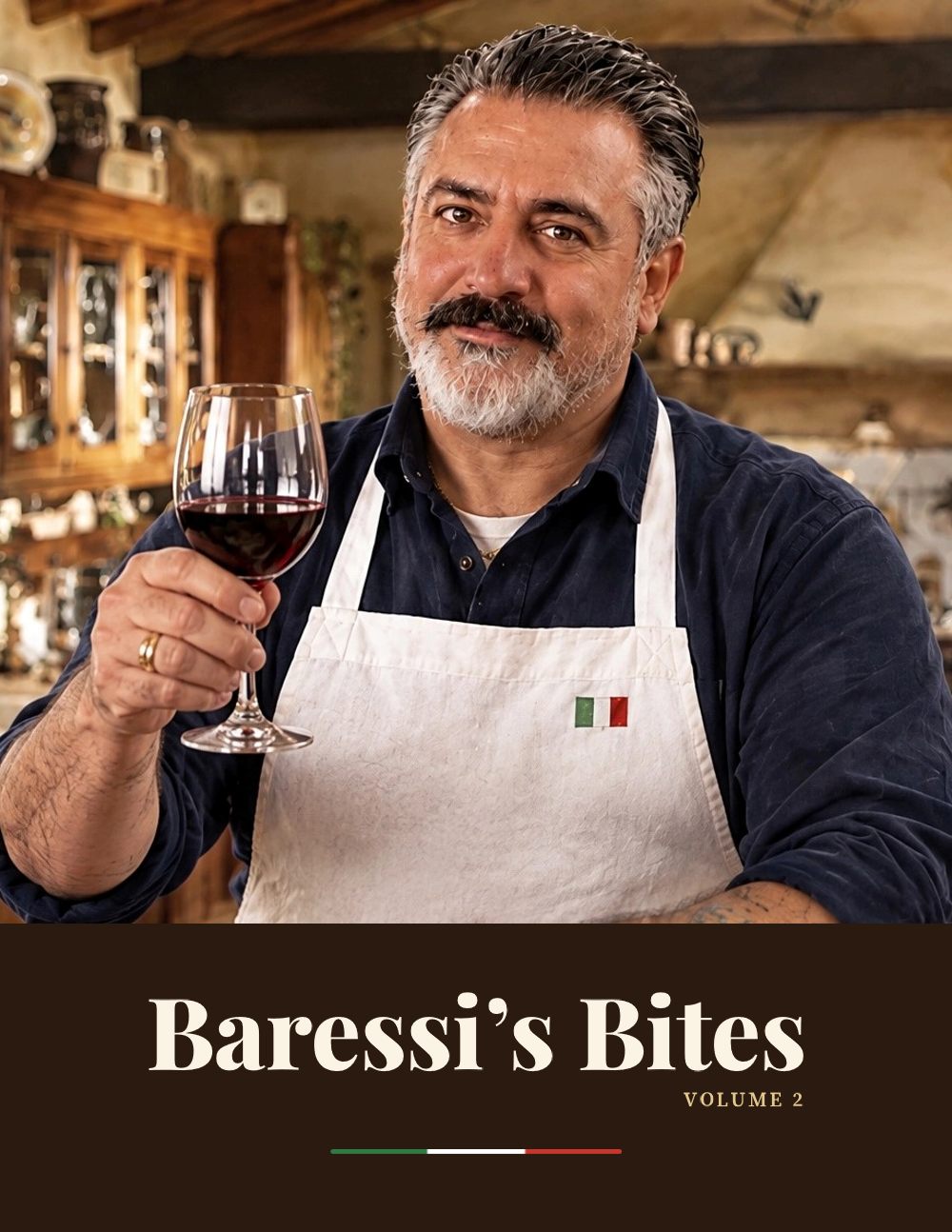
Cover of Baressi's Bites Volume 1Cover of Baressi's Bites Volume 2
100recipes,
2 volumes
Five places, one table

Where the recipes come from.

Three cities in Italy, two in America. Tap a city for a few things you'll learn in the books.

NapoliNaples · CampaniaPizza, ragù and food eaten standing up in the street.
  • Greek settlers named it Neapolis, the “new city,” about 2,500 years ago. Naples still carries the name.
  • Neapolitans were once nicknamed “leaf-eaters” for all the greens they ate. When cheap dried pasta arrived, they became the “macaroni-eaters.”
  • The earliest printed tomato sauce recipes come from Naples, in a cookbook from 1692. The sauce was meant for meat, not pasta.
  • After the war, families sold fried pizza from their doorways, often on credit: eat today, pay in eight days.
  • In 2017 UNESCO added the art of the Neapolitan pizza-maker to its list of world heritage.

In the books: Pizza Margherita, pizza fritta, Sunday ragù, pastiera, struffoli

PalermoSicilyStreet food, saints' days and sweet-and-sour.
  • Under Arab rule, from the 800s, Sicily's kitchens gained sugar, citrus, rice, raisins, pine nuts and saffron. You can taste it in every arancina.
  • Palermo says arancina, eastern Sicily says arancino. Italy's language academy says both are right, which settled nothing.
  • On December 13, Santa Lucia's day, Palermo traditionally eats no bread and no pasta. Arancine all day instead.
  • Every July the city throws a huge festival for Santa Rosalia, its patron saint, with a watermelon pudding on the table.
  • Since 2015, nine Arab-Norman buildings in and around Palermo have been a UNESCO World Heritage Site.

In the books: arancine, panelle, caponata, cassata, marzipan fruit

ToscanaFlorence · Siena · LivornoBread without salt, beans, fire and Chianti.
  • Tuscan bread is traditionally made without salt. Why? Every Tuscan has a different story, and none of them can be proven.
  • The Italian language grew out of the Tuscan spoken in Florence, thanks to writers like Dante.
  • In 1716 the Grand Duke drew the official borders of the Chianti wine area, one of the first wine regions defined by law.
  • In 1891 a Florentine businessman paid to print his own cookbook after publishers turned it down. It became one of the most important cookbooks in Italian history.
  • The story that Catherine de' Medici taught the French to cook? Food historians call it a myth.

In the books: ribollita, peposo, bistecca alla fiorentina, panforte, cantucci

BrooklynNew YorkWhere Tony grew up, behind the counter.
  • Between 1880 and 1914, around 4 million Italians came to the United States, most of them from southern Italy and Sicily.
  • Every July in Williamsburg, more than a hundred men lift a towering four-ton structure and make it “dance” through the streets: the Giglio feast, brought by immigrants from Nola, near Naples.
  • Rainbow cookies aren't from Italy. They were born in Italian-American bakeries in New York.
  • “Feast of the Seven Fishes” is an Italian-American name. In Italy, Christmas Eve dinner is simply la Vigilia.
  • Sauce or gravy? Families still argue about it.

In the books: Sunday gravy, chicken parm, rainbow cookies, a Seven Fishes Christmas Eve

ChicagoIllinoisWhere Tony cooks today.
  • An Italian was in Chicago before Chicago was a city: Enrico Tonti, from Gaeta, met the explorer La Salle there in 1682.
  • By 1920 Chicago had the third-largest Italian population in the United States.
  • When Jane Addams opened Hull House in 1889, Italian families were among its first neighbors.
  • Nobody can prove who made the first Italian beef sandwich. It grew out of Chicago's Italian neighborhoods in the 1920s and '30s.
  • Locals eat thin, “tavern-style” pizza cut in squares, so it could be eaten off a napkin at the bar.

In the books: Chicago Italian beef, hot giardiniera, tavern-style pizza

One rule in every recipe

What makes the dish, and what ruins it.

Six of the 100 Sacred Rules and Forbidden Shortcuts, word for word from the books.

The dishThe Sacred RuleThe Forbidden Shortcut
Sugo di PomodoroNaples · Volume 1Crush the tomatoes with your hands. You want pieces, not purée.Browning the garlic. The second it turns brown, it's bitter.
Home-Oven Pizza DoughNaples · Volume 1Stretch it by hand. The official rules for Neapolitan pizza say so.The rolling pin. It presses out every bubble the dough spent a day making.
Arancine al RagùPalermo · Volume 1The rice must be completely cold before you shape it.Leftover long-grain rice. It has no starch to glue itself together.
RibollitaTuscany · Volume 1Make it the day before. Ribollita means “reboiled.”Eating it the same day and calling it ribollita.
Pastiera NapoletanaNaples · Volume 2Make it at least one day ahead. It needs a night for the orange blossom and the wheat to come together.Cutting it warm, the same day. It's runny and tastes of nothing but sugar.
Chicago Tavern-Style PizzaChicago · Volume 2Roll it thin, really thin. The one pizza where you must use a rolling pin.Cutting it in wedges. Tavern pizza is cut in squares. Always.

Swipe the table to see all three columns →

The books

The everyday table and the feast.

Two volumes, numbered 1 to 100 straight through. Buy one, or get both with a combined edition in a single file.
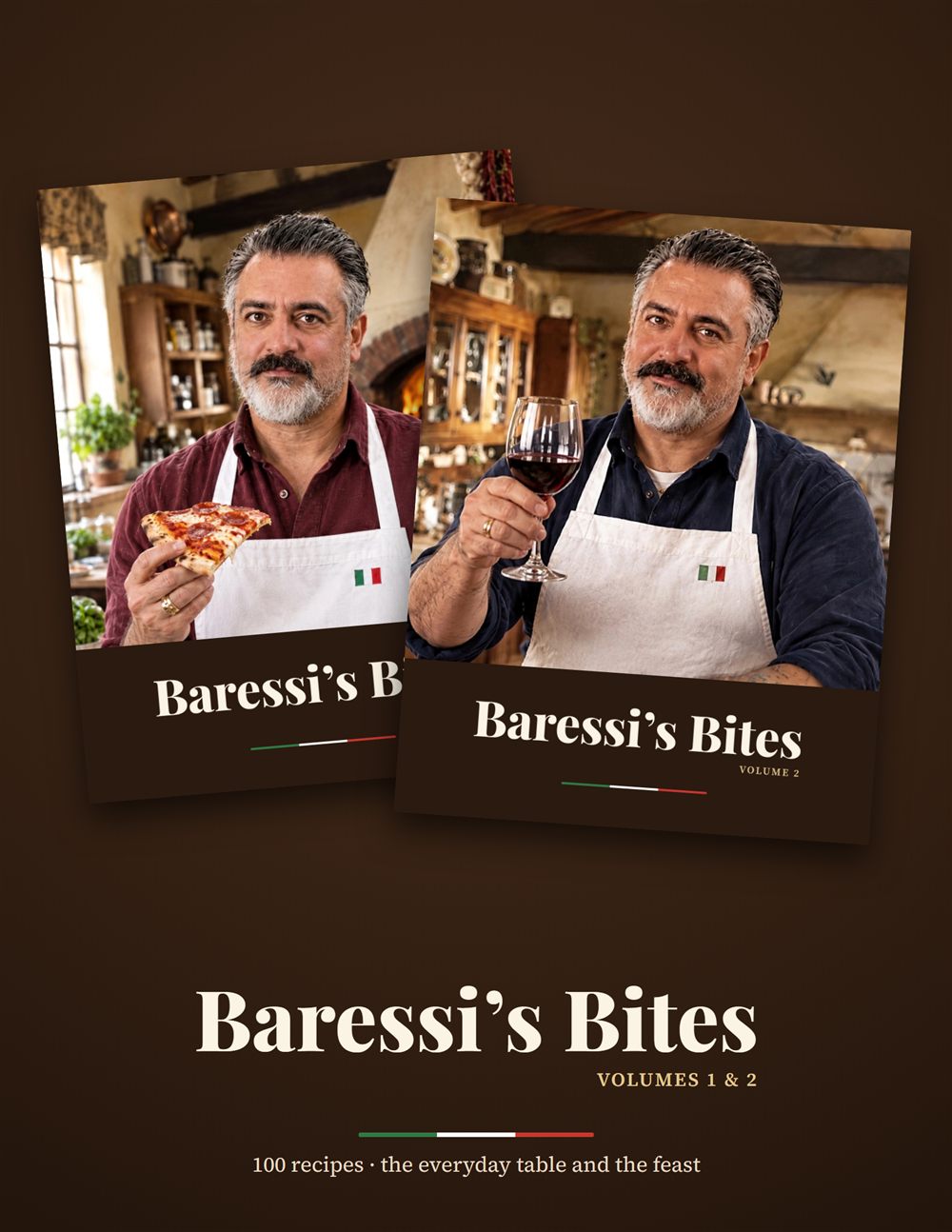
Cover of Baressi's Bites Volume 1

Volume 1

The everyday table · recipes 1–47 · 85 pages
  • Sauces, pizza dough and fresh pasta
  • Street food: pizza fritta, arancine, panelle
  • Ribollita, peposo, pici, chicken under a brick
  • Sunday gravy, chicken parm, Chicago Italian beef
  • Cannoli, cantucci, rainbow cookies
$17.99
Buy Volume 1
Best value Covers of both volumes of Baressi's Bites

Volumes 1 & 2

All 100 recipes · 3 PDFs
  • Volume 1 and Volume 2
  • Plus a combined edition: both books in one 162-page file
  • One contents page and one rulebook for all 100 recipes
  • Every history, heritage and wine page from both books
$19Save $16.98 on buying both separately
Get both books
Cover of Baressi's Bites Volume 2

Volume 2

Feasts, holidays and Sundays · recipes 48–100 · 91 pages
  • Carnival lasagna, pastiera, struffoli, sfogliatelle
  • Cassata, marzipan fruit, Trapani fish couscous
  • Bistecca alla fiorentina, cacciucco, panforte
  • A Feast of the Seven Fishes, tavern-style pizza
  • Babà al rum, homemade limoncello, holiday planner
$17.99
Buy Volume 2
Built to cook from

Open any page and start cooking.

Every recipe follows the same layout, so you always know where to look.
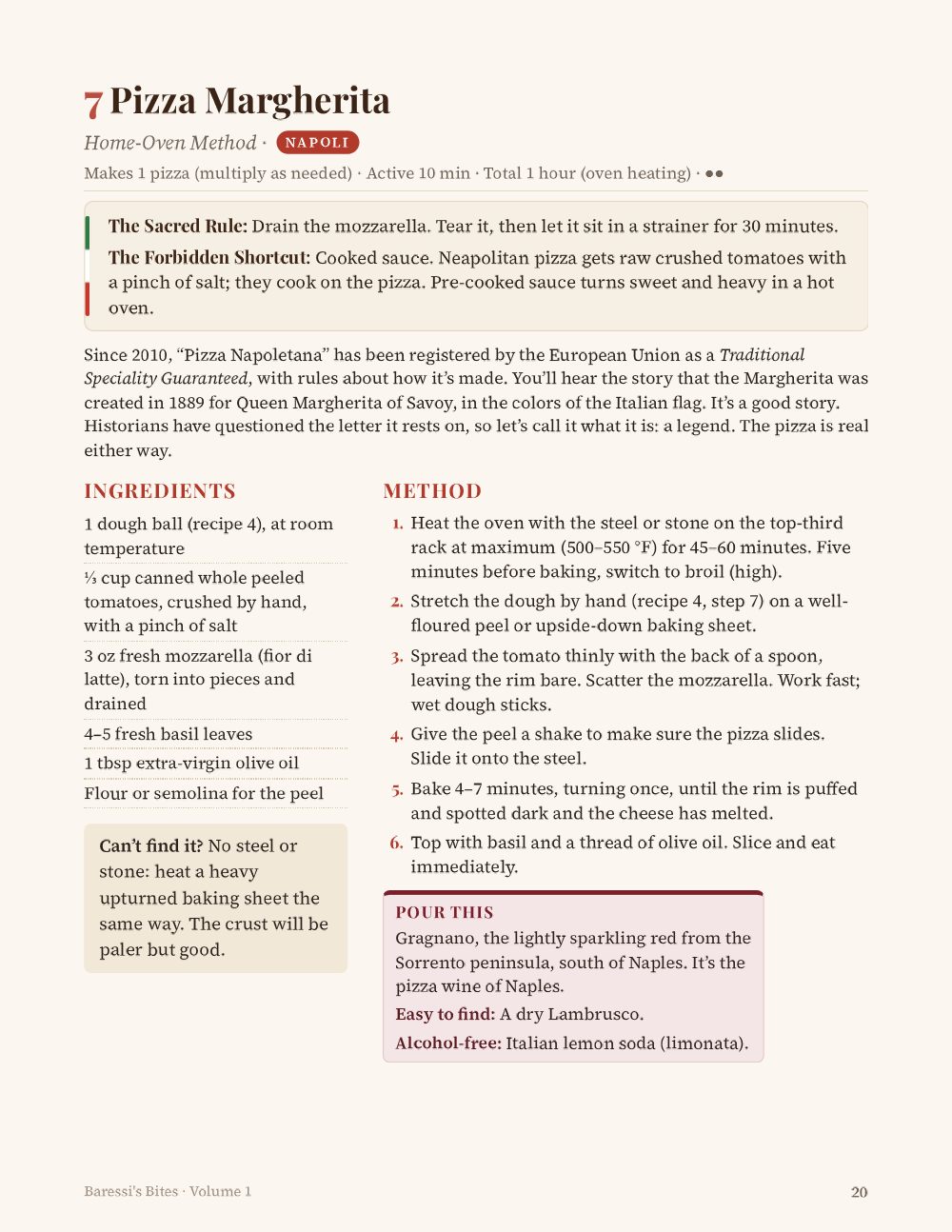
  1. The Sacred Rule and the Forbidden ShortcutTwo lines at the top. Read them first.
  2. A little historyWhere the dish comes from, and when a story is a legend, the book says so.
  3. American measuresCups, ounces and °F, with grams for baking and dough.
  4. Honest substitutionsWhat to use when an Italian ingredient isn't in your supermarket.
  5. Pour ThisA wine from the same region, an easy-to-find bottle, and an alcohol-free option.
  6. Safe temperaturesWhere it matters, the recipe tells you, from USDA values.
A recipe page from Volume 1: Pizza Margherita
100recipes
100Sacred Rules
88wine pairings
24pages of history & heritage
Look inside

Real pages from the books.

Tap a page to see it bigger.

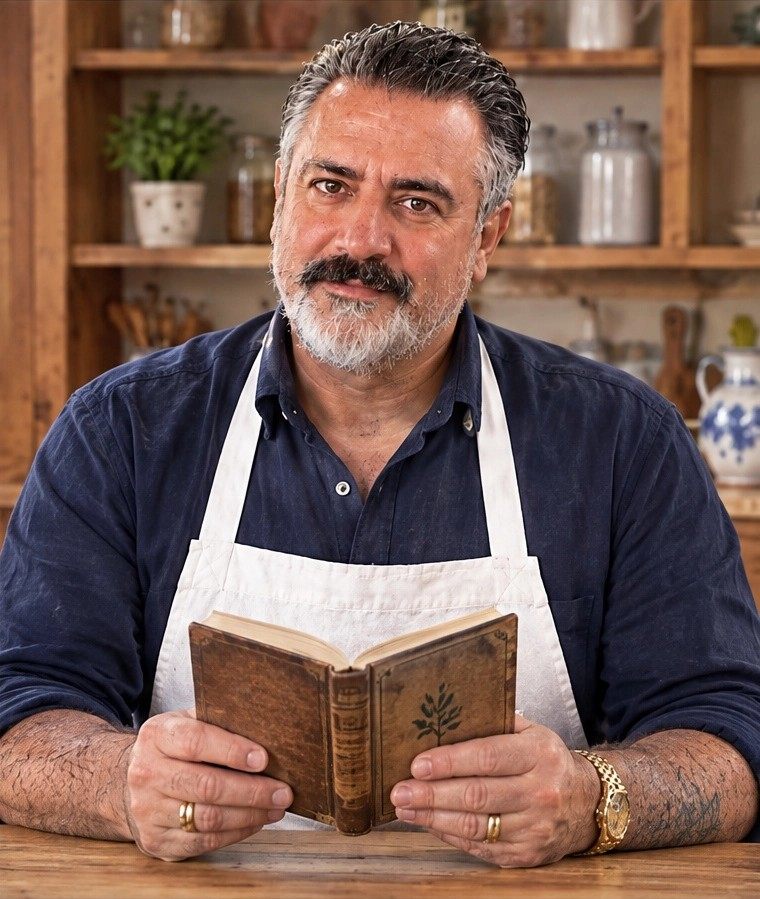
Tony Baressi in his kitchen holding an old recipe book
About Tony

Three cities in Italy. Two in America.

Tony Baressi is a third-generation Italian-American with family roots in Naples, Palermo and Tuscany. He grew up in Brooklyn, in a restaurant-deli with a little bakery in the back, and today he cooks in Chicago.

The recipes in these books come from documented Italian and Italian-American cooking traditions. The history comes from published sources, listed at the back of each book. Where a story is a legend rather than a fact, Tony says so.

Watch Tony on YouTube →

Read the rule. Respect the rule. Then cook.
Is it for you?

Honest answer.

These books are for you if…

  • you cook at home in an ordinary American kitchen
  • you want the real version of a dish, and to know why it works
  • you like a little history with your dinner
  • you host the holidays, or want to start
  • you'd like to know what to pour with it

They're probably not for you if…

  • you want a printed book on the shelf (these are PDFs)
  • you're looking for diet, health or calorie-counted recipes
  • you want everything done in 15 minutes
  • you want full-page food photography: these books use pages, diagrams and Tony, not food photos
7day money-back
guarantee

Cook from it for 7 days.

If it's not for you, email [email protected] within 7 days of your purchase and you'll get a full refund. No questions asked.

Read the refund policy

Questions

Good to know.

What do I get, exactly?

Digital PDF cookbooks. Volume 1 is 85 pages with recipes 1–47. Volume 2 is 91 pages with recipes 48–100. The set gives you both, plus a combined edition with all 100 recipes in one 162-page file.

How do I get the books after I pay?

Payment and delivery are handled by Gumroad. Right after your purchase you can download the PDF, and you'll get an email with your download link.

What can I read them on?

Any tablet, laptop, computer or phone that opens PDFs. The pages are US Letter size, so they also print well at home. The contents page is clickable, so you can jump straight to a recipe.

Do I need Volume 1 to use Volume 2?

No. Each volume stands on its own. When a Volume 2 recipe refers back to one in Volume 1, it also tells you what to use instead.

Are the measurements American?

Yes: cups, spoons, ounces, pounds and °F. Baking and dough recipes also give grams, because a kitchen scale makes them more reliable.

What if I can't find an Italian ingredient?

Each book has a substitution table, and recipes point out good supermarket alternatives, with an honest note when a substitute is a compromise.

Do I have to drink wine?

Not at all. Every wine pairing comes with an alcohol-free suggestion. Wine pairings are for adults 21 and over.

Are there photos of the food?

No. The books use clear recipe layouts, history pages, diagrams and pictures of Tony, but not food photography.

What if I don't like it?

Email [email protected] within 7 days of your purchase and you'll get a full refund. See the refund policy.

How do I get in touch?

Email [email protected].

Baressi's Bites

Read the rule. Respect the rule. Then cook.

100 recipes, two volumes, one combined edition. $19 for the set.

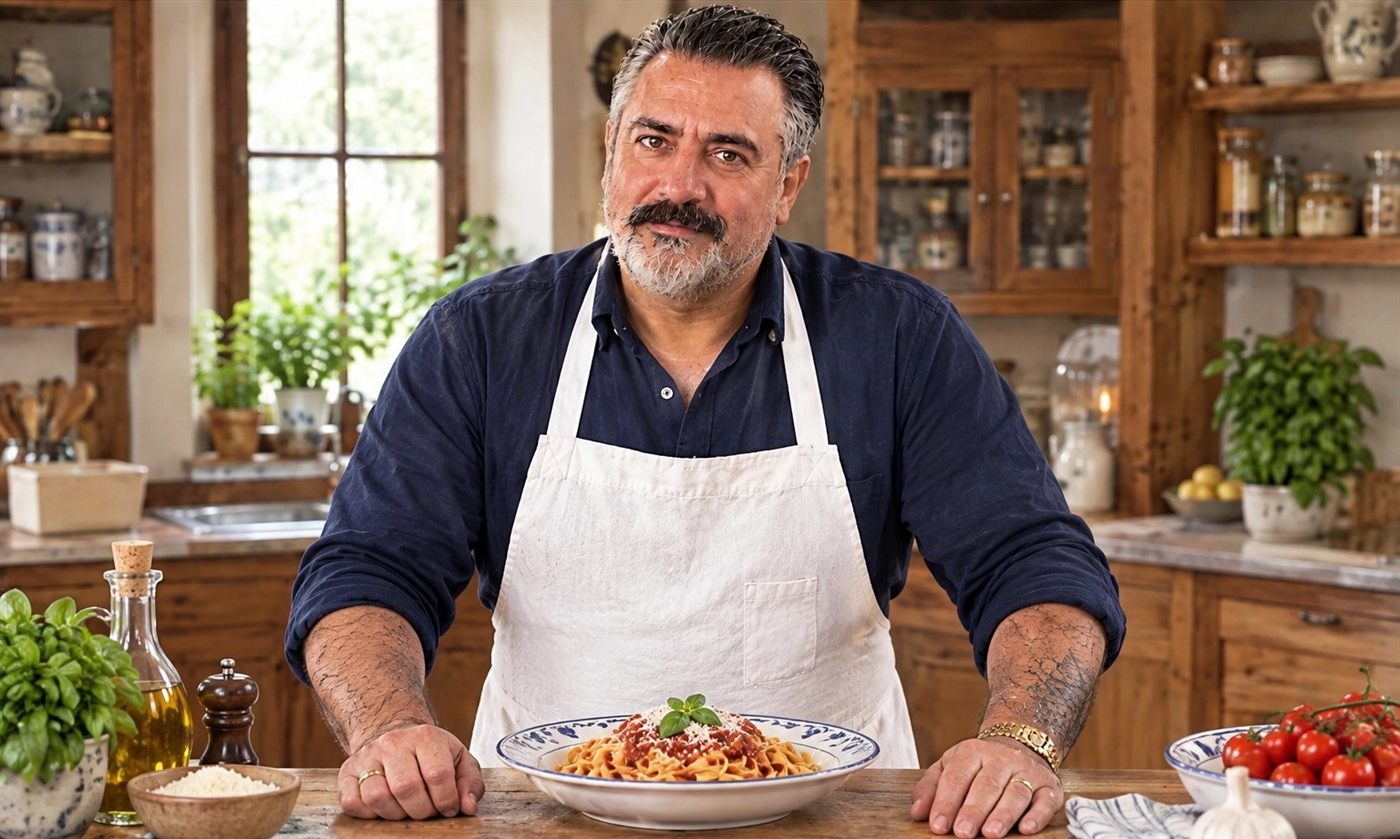
Get both books $19 Tony Baressi at his kitchen table with a plate of pasta